
 EN
EN RU
RU
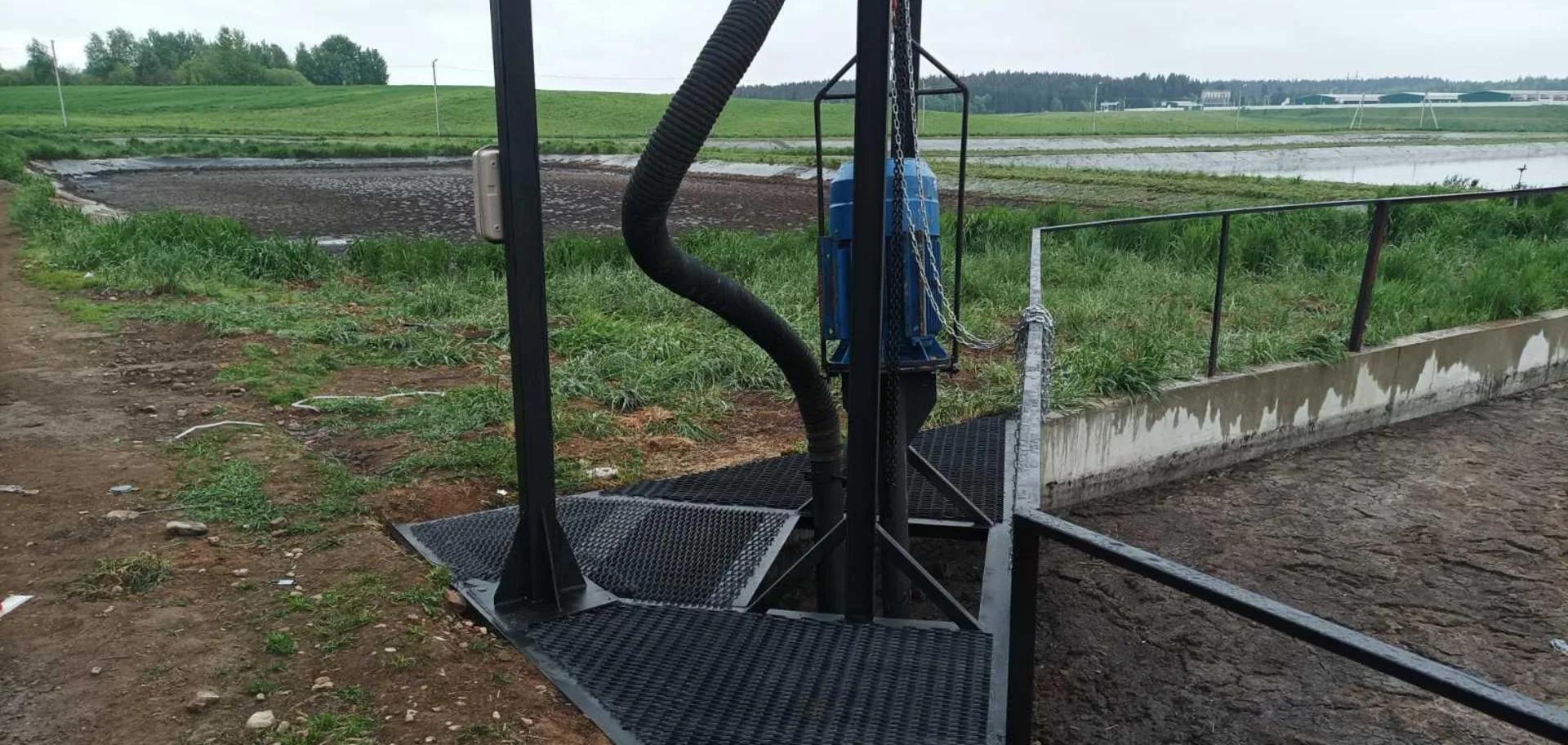
Submersible centrifugal industrial pump VTN-1D
In-house design, production and installation. TU BY 390449655.001-2017
About the VTN-1D pump
VTN-1D is a version of the base model of the series for viscous and contaminated media, with the pump end extended to 3 m: intake from deep pits and sunken tanks that a standard column cannot reach. The hydraulics stay standard — capacity up to 300 t/h on liquid manure, head up to 24 m, mixing in the intake area within a radius of up to 5 m. Like the whole VTN series, this version takes raw manure at natural moisture from 75% with no water dilution. Below three metres, and at the maximum volumes of the series, the job goes to the VTN-1DU flagship; for a standard pit the base VTN-1 is enough, and where there is no power grid there is the VTN-1MT driven by a tractor PTO.
Key features:
- A 3 m pump end — intake from a depth of up to 3 m in pits and sunken tanks where a standard column falls short
- The hydraulics of the base model, unchanged: capacity up to 300 t/h on liquid manure and up to 200 t/h on viscous manure (85% moisture), head up to 24 m
- Manure at natural moisture from 75% — no dilution water to add, and no growth in the volumes to store and haul
- Cutting mechanism at the inlet: fibres are not a limit, and solids pass through at sizes up to 30 mm
- Installation opening from 600×600 mm and a spigot for a pressure hose with inner Ø from 100 mm — the unit fits the same hatch as the base model
Applications:
- Livestock complexes and farms: pig and cattle farms with deep manure collectors — intake from pits and sunken tanks, delivery to vehicles, storage facilities and processing.
- Municipal services and wastewater treatment: effluents and sludge with fibrous inclusions from sunken chambers and receiving tanks.
- Industry and construction: process effluents with sediment, pumping contaminated water out of deep sumps and excavations.
The VTN-1D is chosen when the tank is deeper than standard while the volumes stay the same. A shallower pit needs only the base VTN-1; homogenization in a compact unit calls for the VTN-1M pump-mixer; a site without a power grid takes the tractor-driven VTN-1MT; a large complex with a deep tank and a long line takes the VTN-1DU flagship.
A portal with a hoist, a mast with a gooseneck and valve pipework — a turnkey pumping station
VTN series pumps on site
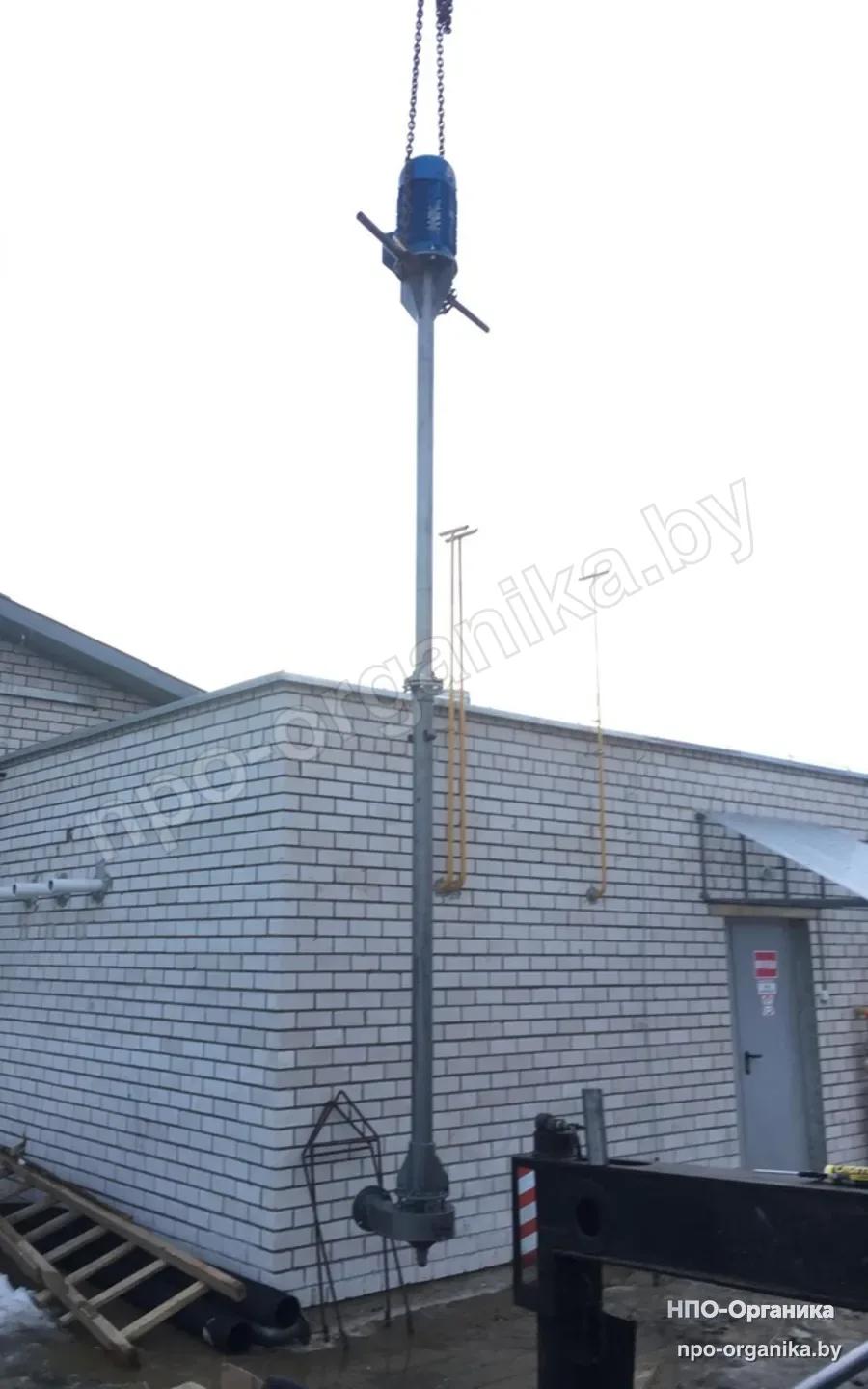
Installation: a VTN series unit is lifted fully assembled, and the column goes into the tank vertically 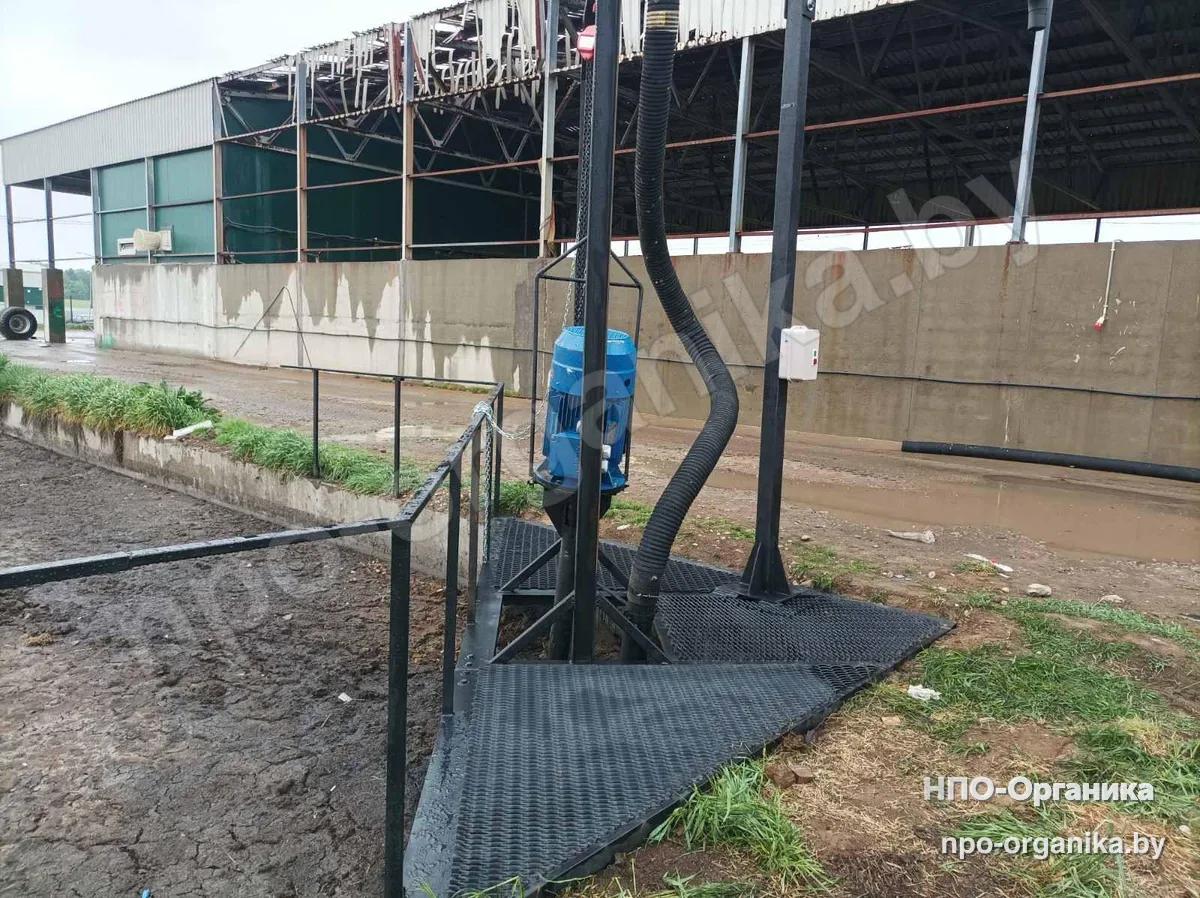
Stationary setup: a portal above the pit, a service platform with railings and the pressure hose
The models of the series look alike — these photographs show VTN series pumps on customer sites.
Deeper than the base model, short of the flagship
When the standard submersion of a VTN-1 (up to 1.5 m) is not enough and the flagship would be overkill for the job, the answer is the VTN-1D: the same base pump with a pump end extended to 3 m. Hydraulics, drive and servicing are those of the VTN-1, which has been running on farms since 2015; the single difference is that it reaches the bottom of a deep pit.
The depth of the pit changes nothing about the main point: like the whole series, the 1D moves manure from 75% moisture — without the dilution water that would then have to be stored and hauled. What that means in money for your own herd is what the calculator works out (Belarus and Russia).
Estimate your farm's savings
What the water added to dilute manure costs per year: hauling, electricity, and the water itself.
Norm: 55 kg/head/day at 88.4% moisture; milking parlour effluent 20 l/head/day
Refine the calculation and see the assumptions on the calculator page
- In production since 2007
- More than 100 units installed on farms
- Manufacturer's service in Vitebsk
- Delivery across Belarus and Russia
TU BY 390449655.001-2017, EAEU declaration No. BY/112 11.01. TR010 000.00 23818
Certification is held by the manufacturer of the series, VitTechNasos LLC; the VTN series is built by NPO-Organika, the successor to that manufacturer.
Where it sits in the range
Intake from a depth of up to 3 m in pits and sunken tanks; capacity up to 300 t/h on liquid manure and up to 200 t/h on viscous manure (85% moisture), head up to 24 m — the figures of the base model (limits of different operating modes; the duty point is selected when you order). If the tank is deeper than three metres, or you need the maximum volumes of the series, look at the VTN-1DU flagship (submersion from 0.5 to 10 m); for a standard pit the VTN-1 is enough.
Working principle of the VTN-1D pump
The VTN-1D submersible centrifugal pump works in viscous and contaminated media — manure of reduced moisture, effluents with sediment and fibrous inclusions. The version differs in one thing: the pump end is extended to 3 m, so the pump reaches the bottom of pits and sunken tanks where a standard column falls short. In the intake area the mass is evened out within a radius of up to 5 m, and from there it goes into the pressure line — up to 1 km depending on flow rate, pipeline diameter, lift and moisture of the mass.
Everything else on this version is standard: hydraulics, drive and the service routine are those of the VTN-1, so spare parts and servicing are shared by both machines. The wetted parts are steel and built for viscous and abrasive media; a cutting mechanism at the inlet shears straw and long-stemmed inclusions, so mesh filters and a separate shredder are not needed on the line. Lubrication is forced and not tied to any particular grease grade. The detailed design is described in the product passport.
Reviews from farms
These letters of thanks and reviews were addressed to the manufacturer of the series, VitTechNasos LLC; today the VTN series is built by NPO-Organika, the successor to that manufacturer.
“…thanks VitTechNasos LLC for its professionalism in our joint work and for the high quality of the equipment supplied to us. Installation work and equipment servicing are carried out solely by highly qualified specialists and to a consistently high standard.”
VTN-1D technical specifications
| Pump end length, m | 3 |
| Submersion depth, m | up to 3 (immersion of the pump end below the liquid surface) |
| Capacity on liquid manure, t/h | up to 300 |
| Capacity on viscous manure (85% moisture), t/h | up to 200 |
| Head, m | up to 24 |
| Electric motor power, kW | 18.5 / 22 |
| Power supply | 380–400 V |
| Rotation speed, rpm | 1500 |
| Impeller diameter, mm | 243 |
| Discharge spigot | for a pressure hose with inner Ø from 100 mm |
| Max. discharge lift (with extension), m | up to 10 |
| Pumping distance | up to 1 km (depends on flow rate, pipeline diameter, lift and moisture of the mass) |
| Mixing radius in the intake area, m | up to 5 |
| Moisture content of the pumped mass, % | from 75 |
| Max. solid particle size, mm | up to 30 (fibres are not limited — sheared by the cutting mechanism) |
| Media temperature, °C | up to +40 |
| Weight, kg | up to 370 (guide figure; differs with another column length) |
| Wetted parts material | steel |
| Bearing lubrication | forced, any grease grade |
| Min. installation opening, mm | 600×600 |
| Operating mode | stationary |
| Warranty | 12 months |
Maximum capacity and maximum head belong to different operating modes and are not reached at the same time. The mode for the depth of your tank and for your line is selected when you order.
Installation and site preparation
- Installation is done by the manufacturer. Supply, installation and commissioning under a single contract: we deliver, install, start the equipment up and hand over a working station under an acceptance certificate. Replacing old equipment is possible — dismantling it is our job.
- What the customer prepares before the installers arrive: a concreted pad by the manure collector and a cleaned receiving tank. We send the requirements once the order is placed — for your own scheme.
- Power connection. The pump is connected to a 380–400 V supply through a control panel; the panel, the cable and the protective switchgear are part of the scope of supply agreed for the order.
- Servicing without a crane. To lift the pump for servicing, the station comes with a portal or a jib crane with a hoist — the pump is raised by your own people, no mobile crane required.
- The first start-up is carried out by our specialists during commissioning; the customer receives the operating manual and the servicing schedule.
VTN-1D — frequently asked questions
How does the VTN-1D differ from the VTN-1?
Only in the pump end: on the 1D it is extended to 3 m, for intake from deep pits and tanks. Capacity, drive and servicing are those of the base model; the detailed design is in the product passport.
When do I need a VTN-1D and when a VTN-1DU?
If the job is to reach deeper than the standard 1.5 m at ordinary volumes, the 1D is enough (submersion up to 3 m). The VTN-1DU flagship is for large complexes: submersion from 0.5 to 10 m and the highest capacity and head in the series.
How do I order a VTN-1D?
Send us the depth of the tank and the parameters of the line — we will confirm the configuration and name the price (on request). We build to the conditions of your farm; 12-month warranty, manufacturer's service in Vitebsk.
Price on request: the configuration is assembled for your site. Leave a request and an engineer will select the right version and quote the price.
Related Products
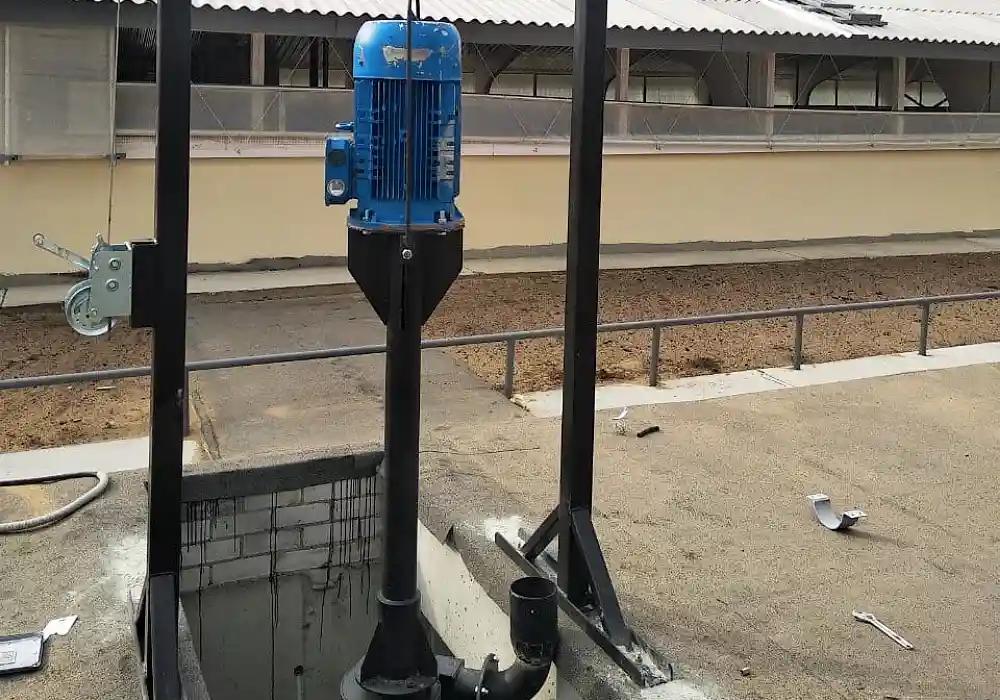
Industrial pump VTN-1
The base model of the series: pumps manure from collectors and pits to storage and vehicles. Takes the mass at natural moisture from 75% — without the dilution water the farm would then have to store and haul. Capacity up to 300 t/h on liquid manure.
Learn more →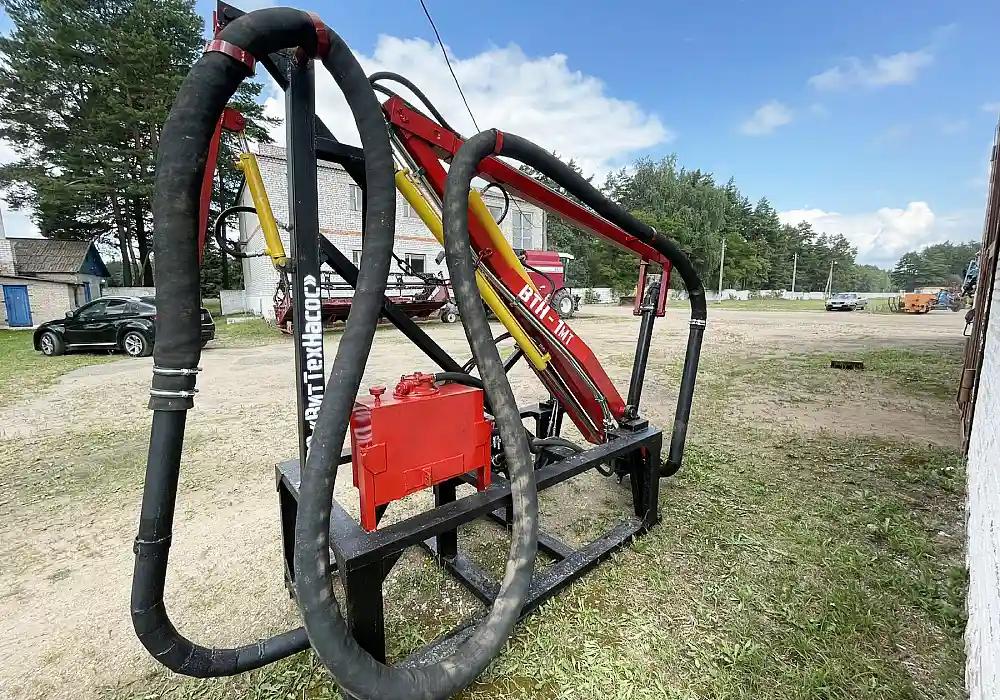
Industrial pump VTN-1MT
The autonomous model: driven by a tractor PTO, it pumps where there is no mains power — no foundation, no electrical work. The boom lowers the pump straight into the mass: intake from 2.5–5.5 m, up to 6 m with the extended boom. One unit serves every point of the farm.
Learn more →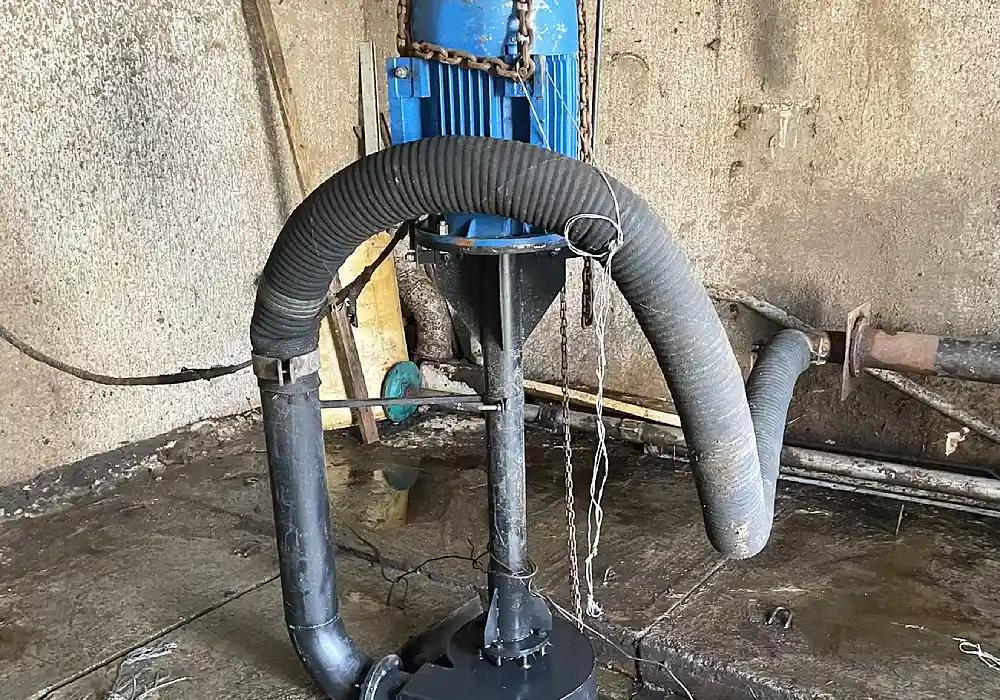
Industrial pump VTN-1DU
The flagship of the series for large complexes: capacity up to 650 t/h on liquid manure, submersion from 0.5 to 10 m. One unit covers volumes that would normally take two pumps — less installation, wiring and fewer points of failure.
Learn more →